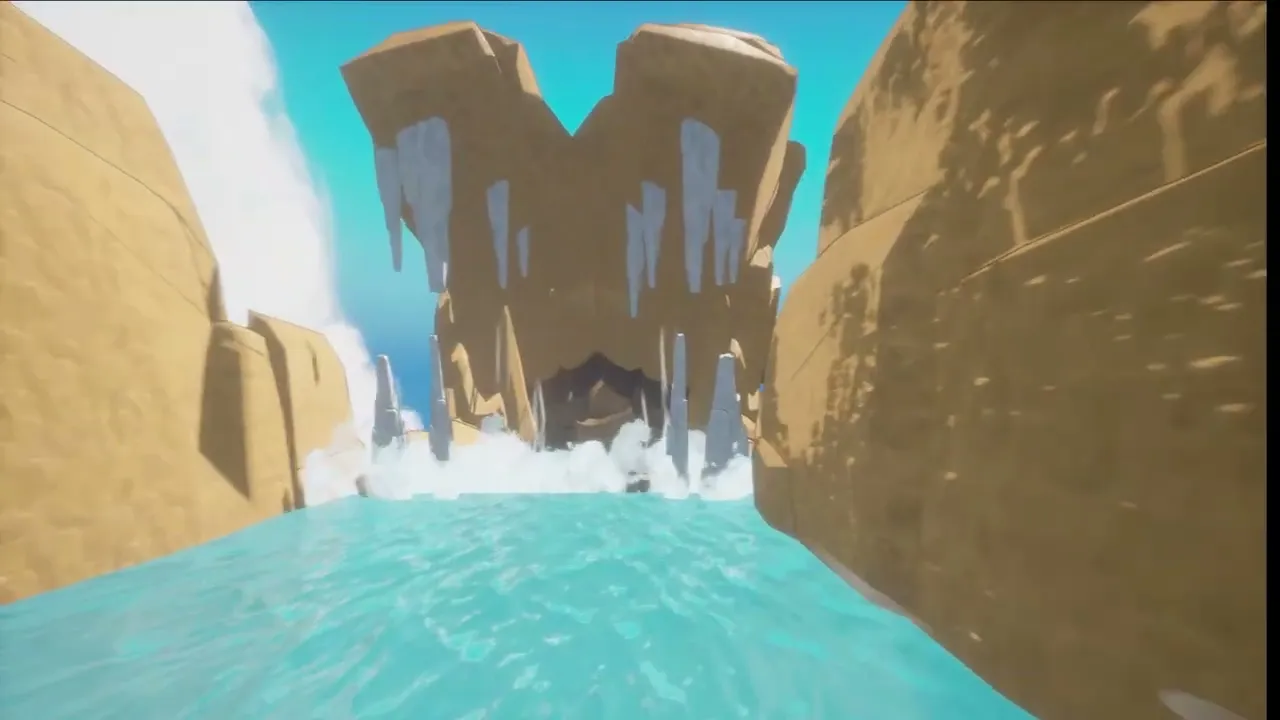

Untamed Skies (2025)
Genre: Third-Person Dragon Racing | Engine: Unreal Engine 5.5
Mission Brief
A high-speed dragon racing game where players toggle between gliding and dragon-riding mechanics. I served as the Level Designer for the final stage and the Lead UI/UX Designer.
My focus was on establishing a gamepad-centric control scheme and implementing a narrative-driven UI via Blueprints, refining the experience through multiple playtest iterations.
Key Contributions (Role)
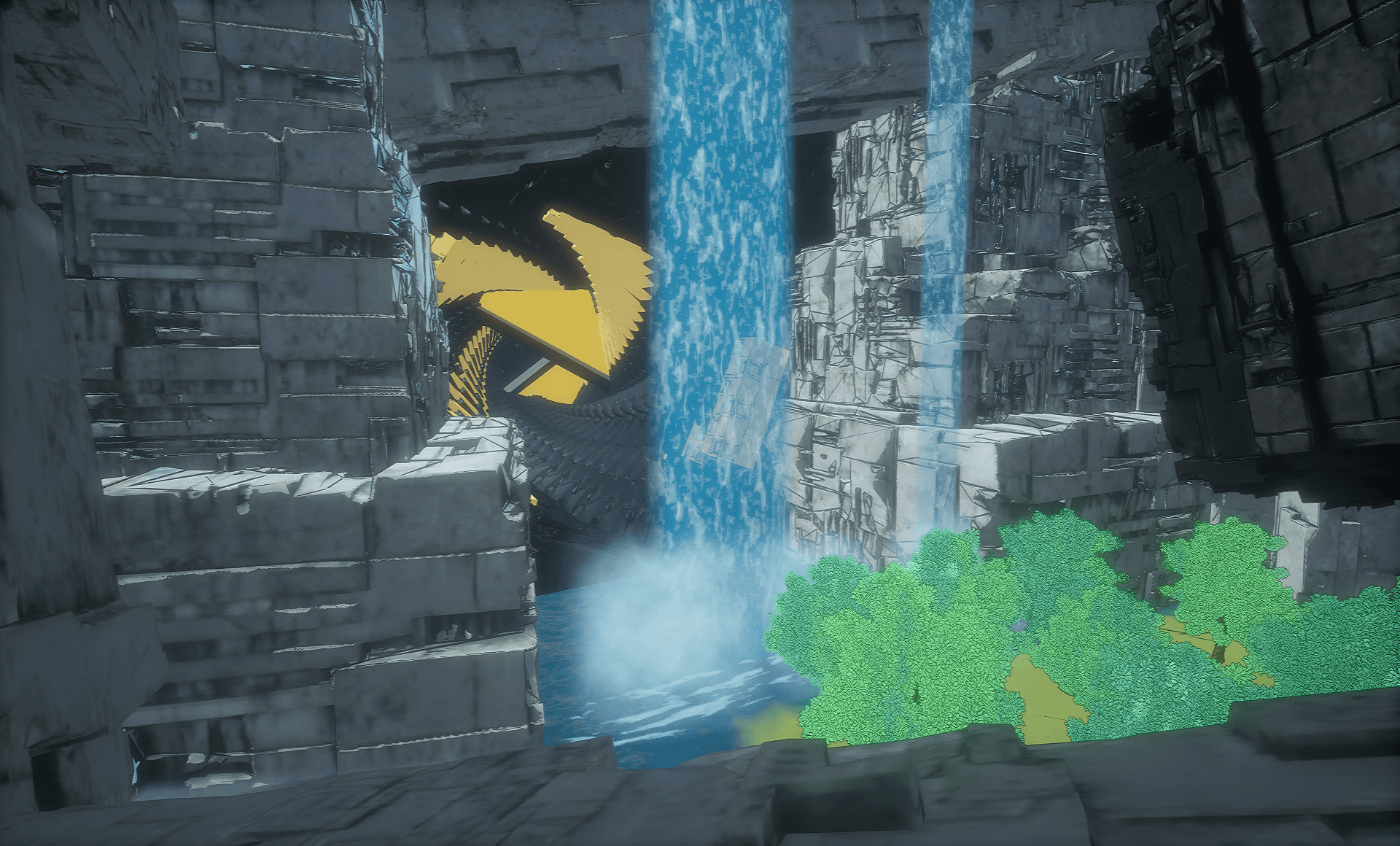
Level Design: Layout (Gray box to Kitbash), Pacing, Environmental Storytelling.
UI/UX: Wireframing, 2D Asset Creation, UMG Implementation, Input Logic (Gamepad).
Technical: Gameplay Scripting (Blueprints) for UI states and Level interactions.
Source Control: Perforce Repository Management.


Design Process & Challenges (Level Design)
1. Refining the Core Loop (Iteration)
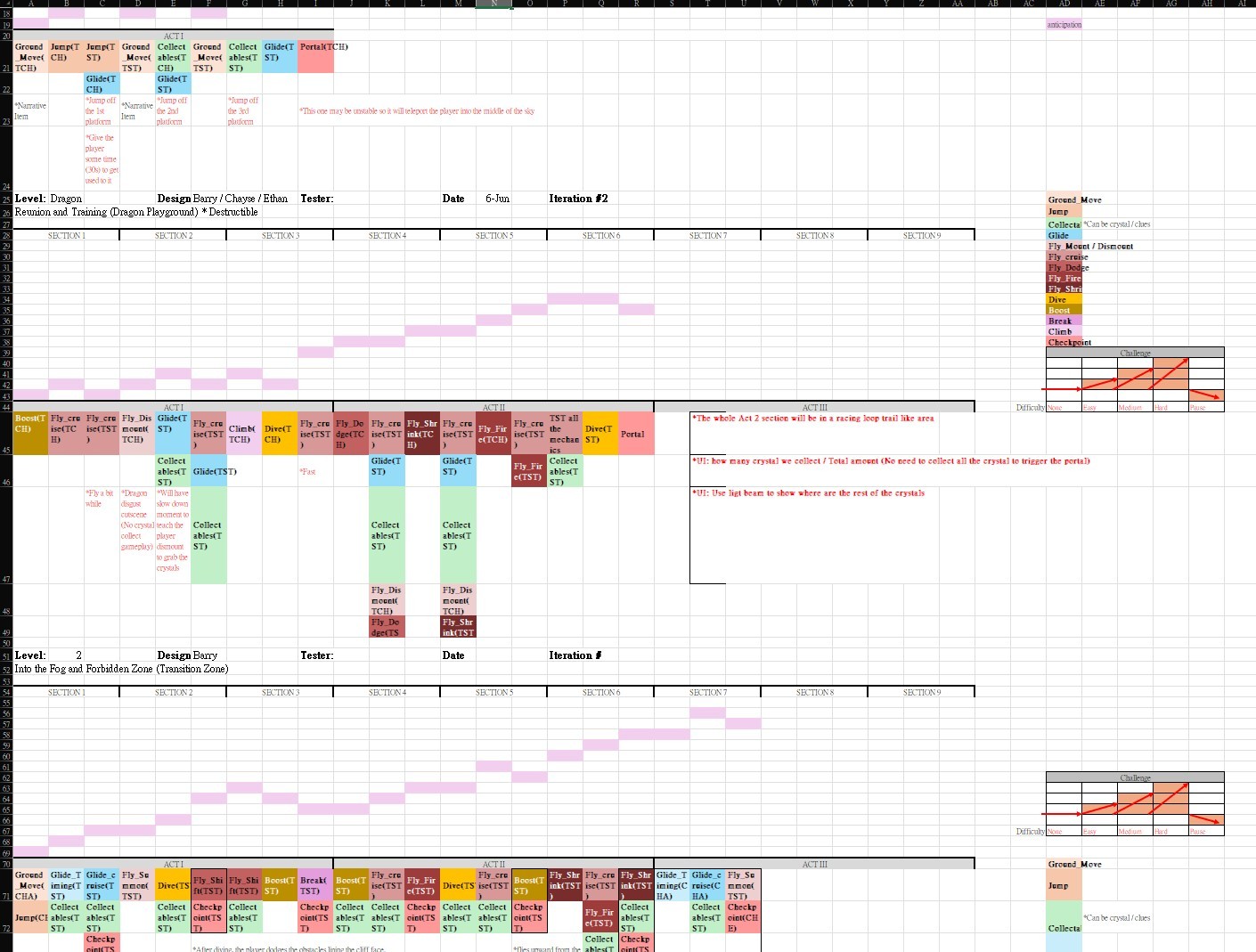
To facilitate rapid iteration and team collaboration on a large-scale map, our team established a Sublevel and Beat-based hierarchy. By compartmentalizing the level into distinct gameplay sections (e.g., 'Glide_Beat2'), team members could work in parallel on specific beats—simultaneously grayboxing and kitbashing—without version control conflicts, ensuring a seamless assembly of the final level.
2. Solving 3D Navigation Constraints
The Challenge: Unlike ground racing, aerial movement introduces complex 3D variables (360-degree movement), making it difficult to contain players within the track without breaking immersion.
The Solution: I proposed and tested two penalty systems:
Option A: Respawn at anchor point (Hard Reset).
Option B: Pushback with deceleration (Soft Penalty).
Result: We adopted Option B to maintain the "flow state." Consequently, I restructured the level into a clear, linear pathway and designed the collision geometry with glancing angles rather than flat walls. This ensures players graze obstacles and maintain forward momentum instead of coming to a frustrating halt.
3. Audience-Centric Tuning
Considering the exhibition audience (primarily teenagers), I balanced the level difficulty and narrative pacing to be accessible yet engaging for an all-ages demographic.


UI/UX Design Strategy
1. Narrative-Driven Interface (Diegetic UI)
Concept: To reflect the protagonist’s journey through interdimensional portals, I designed the UI to resemble a hand-written explorer's journal.
Visual Style: Utilized ink strokes and paper textures to create a fantasy aesthetic. A dynamic feature was implemented where the "notes" in the journal expand as the player progresses through the level, reinforcing the sense of adventure.


2. Technical Implementation: Gamepad-First UI System
The Pivot: Recognizing that the tactile feedback of a controller offers a far superior experience for aerial flight compared to a mouse, I shifted the project's primary input focus to Gamepad.
The System: To support this, I architected a modular UMG Navigation System anchored by a Blueprint Function Library. This centralized the logic for Enhanced Input context switching and widget focus states, ensuring that menu navigation is scalable, consistent, and as fluid as the dragon-riding gameplay itself.


3. UX Iteration: The Stamina System
Evolution: Originally designed as a standard "Zelda-style" circular bar.
Feedback: Playtesters struggled to read the gauge during high-speed flight.
Refinement: I iterated the design into discrete "Lightning Bolt" icons. This made resource management more intuitive (countable) and visually impactful, aligning better with the game's energetic tone.